Understanding Aircraft Visibility and Visual Detection
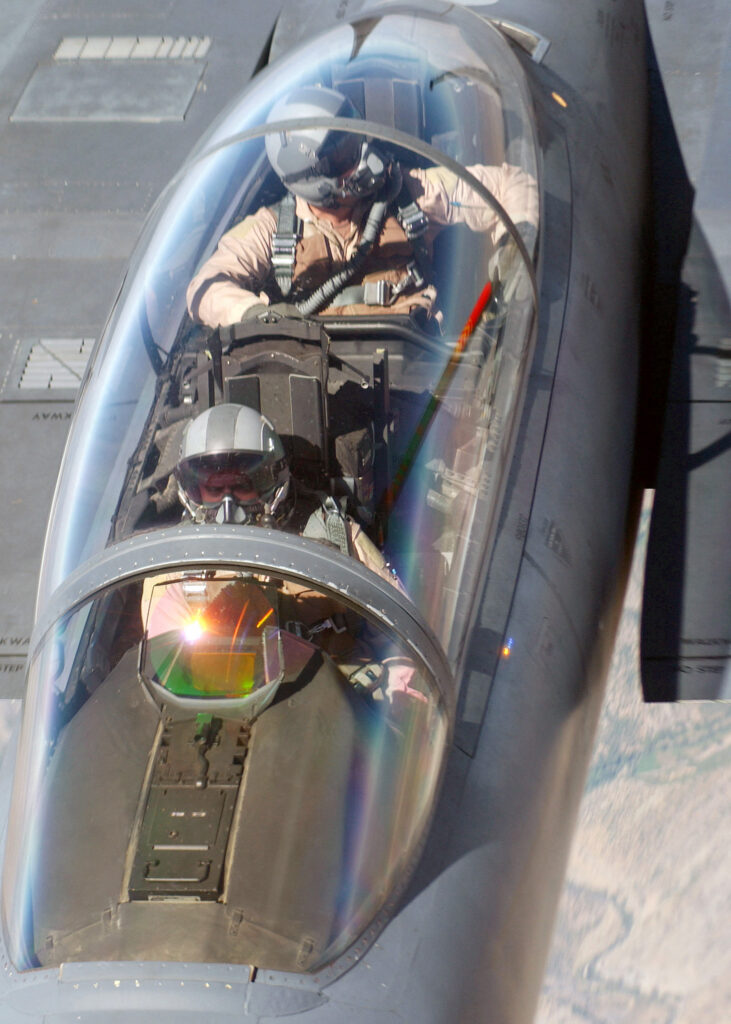

An aircraft can be visible in principle yet difficult for a person to notice. Visual detection depends on the interaction between the object, surroundings and observer.
Contrast and background
An aircraft viewed against a uniform sky may appear differently when seen against clouds, haze or terrain. Lighting, viewing angle and apparent size affect how readily a target stands out. The visibility reported for an environment is not a guarantee that every object in that environment will be recognized.
Attention and geometry
A person’s attention moves among competing tasks. An object that changes little in apparent position may attract less attention than an obvious moving target. These limitations help explain why visual observation is an imperfect safety layer.
Aircraft design and the human observer
Cockpit structures, seating position and the placement of displays can influence what a person sees. Aircraft conspicuity and observer performance are related but distinct topics. Neither a conspicuous aircraft nor a conscientious observer eliminates every source of uncertainty.
Beyond the visual layer
The NTSB publishes safety alerts emphasizing the limits of relying solely on vision. Surveillance and alerting technologies offer additional information, with their own limitations. Studying these layers together is more useful than presenting any single one as a complete solution.
For additional context, explore the history of see-and-avoid.
Why seeing is not merely looking
An aircraft’s visibility depends on more than its physical size. Contrast, background, lighting and the geometry of the viewing situation influence how readily an object is distinguished. A photograph of an aircraft against a uniform sky can look dramatically different from one against terrain or haze. That example helps explain why an observer may have difficulty detecting an object that seems obvious in another image. Photographs, however, cannot reproduce all of the dynamic conditions in a cockpit.
Perception and interpretation
Detection is only the first part of understanding a potential conflict. A person must also recognize what the object is and interpret its movement. The amount of apparent movement can be misleading when the viewing geometry changes. Attention may be divided between several other tasks, and the observer does not have unlimited time to interpret each cue. These are reasons that researchers and safety organizations discuss the limits of relying exclusively on visual observation.
A complementary perspective
Technology can add information about traffic beyond what is immediately visible, but a display is also an imperfect representation. Not every aircraft will appear on every system, and the meaning of an indication depends on its design and available data. Our introduction to airborne traffic information and alerting considers that distinction. The goal of an educational discussion is not to rank vision against technology as competing solutions. It is to understand why different sources of information have different limitations and how a safety system can account for them.
Further reading
- FAA AC 90-48E: Pilots’ Role in Collision Avoidance
- NTSB Aviation Safety Alerts
- FAA AIM: Surveillance Systems
Educational background only; not a source of operational flight instructions. Consult current official publications and qualified instructors.