How Collision Avoidance Technology Has Changed Aviation Safety
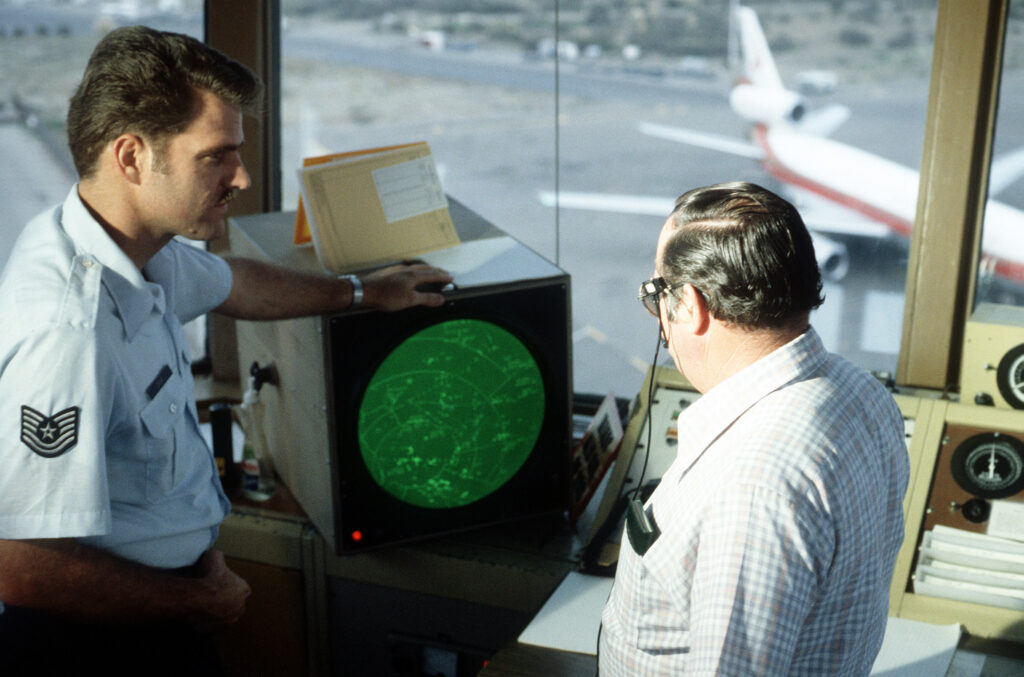

The development of electronic surveillance and airborne alerting has changed the information available to aviation professionals. Understanding the distinction between these technologies helps explain their contribution to safety.
Surveillance and the traffic picture
Radar and other surveillance systems help establish a picture of aircraft activity. Different surveillance methods obtain different kinds of information, and their capabilities vary. Primary radar relies on reflected energy, while cooperative systems rely on information associated with appropriately equipped aircraft. The resulting traffic picture is a representation built from observations, not a perfect view of everything in the airspace.
ADS-B and shared information
Automatic Dependent Surveillance–Broadcast provides aircraft information through broadcasts. Depending on the installation and available services, traffic information can also be displayed in the cockpit. The FAA’s Aeronautical Information Manual describes the use and limitations of these surveillance services. In particular, a traffic display is not automatically a collision avoidance system merely because it depicts other aircraft.
Alerting and collision avoidance
A collision avoidance system is designed to assess traffic according to its intended function and provide relevant alerts. Equipment differs in its capabilities and intended operational use. A traffic advisory and a resolution advisory are not identical concepts. Readers should consult applicable official documentation rather than assume that all aircraft carry the same systems or that every alert has the same meaning.
The role of human factors
Technology changes the information environment, but it also introduces new tasks. People must interpret indications while managing other demands. An interface can draw attention to information that might otherwise be missed, yet a display can also compete for attention. Equipment integration, training and system design are therefore inseparable from the benefits of additional information.
A complementary safety system
The most important distinction is between providing information and guaranteeing an outcome. Technology can support awareness and collision prevention, but it cannot remove every limitation of coverage, equipment or human performance. The FAA surveillance guidance and NTSB safety alerts describe the value of understanding these boundaries. A layered view of aviation safety keeps the strengths and limitations of each element in perspective.
For additional context, explore the development of radar surveillance.
Surveillance and alerting are different functions
A system that provides information about nearby aircraft is not necessarily a system that evaluates a collision threat. Surveillance concerns the acquisition and presentation of information, while alerting involves a particular interpretation of a possible conflict. These functions may interact in an aircraft or ground system, but their distinction is important for understanding aviation technology. A display that shows traffic is useful for awareness without automatically providing the same functionality as a dedicated collision avoidance system.
The contribution of radar
Ground radar has played a major role in building a picture of traffic for air traffic services. Primary radar and cooperative surveillance illustrate different approaches to obtaining information. The picture available to a controller is shaped by the capabilities and coverage of the system, as well as by the information associated with each detected or reported object. A historical radar photograph helps illustrate the development of surveillance interfaces, but it cannot establish how a modern installation operates.
Aircraft-generated information
Automatic Dependent Surveillance–Broadcast, commonly referred to as ADS-B, uses aircraft-generated information as part of a surveillance system. It is distinct from a simple reflected radar signal. The terminology itself indicates that the system depends on other sources of information. Its benefits and limitations are connected to equipment, data availability and the services involved. It is therefore misleading to describe ADS-B as a universal map of everything flying nearby. Official FAA guidance is needed for the equipment and operating requirements applicable to a particular flight.
The purpose of airborne collision avoidance
Airborne collision avoidance systems are designed to address potential conflicts using defined system logic and available traffic information. TCAS is a well-known example of this class of technology. Its purpose differs from merely making a map of nearby traffic. The terminology used by an alerting system has a specific meaning that depends on its approved design. This article does not describe alert responses or recommend operating procedures. Readers who need that information must rely on the documentation and training applicable to their equipment.
The importance of the human interface
More data does not automatically produce a better understanding of a situation. A person must interpret information while carrying out other tasks. The way a system distinguishes a routine indication from an important change influences the attention required to understand it. Engineers therefore consider presentation, prioritization and consistency as well as the underlying sensing or processing capability. The human interface is part of the safety system, not an afterthought added once the technical components are complete.
What happens when the picture is incomplete
A traffic display can appear orderly even though it represents only the information available to the system. Different sources may have different coverage and limitations. A person who assumes a display is comprehensive may interpret an absence of information as evidence that nothing is present. That is a general reasoning error rather than a characteristic unique to aviation. The distinction between absence of information and information about absence is useful when discussing both visual observation and electronic surveillance.
Why layers are not interchangeable
Aviation technology has developed across several functions: surveillance, communication, navigation, information presentation and alerting. An improvement in one function does not necessarily eliminate the need for another. The relationship between those functions depends on the operating context. Our discussion of complementary layers of aviation safety technology explores this idea at a broader level. The evolution of the system is best understood as the integration of several capabilities rather than a single invention that replaced all earlier methods.
The historical and educational perspective
The original See and Avoid initiative focused on sharing safety information across aviation communities. Modern technology changes what information can be available, but does not make the need to understand its meaning obsolete. A useful educational publication can connect historical developments to present-day terminology while keeping a clear boundary between general explanation and operational instruction. The FAA Aeronautical Information Manual and the Pilots’ Role in Collision Avoidance advisory circular provide appropriate starting points for readers who want to understand the official context. The central question remains not simply what a system can display, but what the available information can reliably establish.
Reading specifications in context
Technology descriptions often emphasize capabilities. For a reader trying to understand the role of a system, the conditions attached to those capabilities are equally important. A particular display may be described as providing traffic information, but the description alone does not establish what data are available in every environment. An alerting system may be designed for a defined class of situations without addressing every possible hazard. It is helpful to distinguish the manufacturer or regulator’s description of a specific function from a broader claim that the system prevents accidents. The distinction makes comparisons between equipment more meaningful and discourages unsupported conclusions. Readers can use official documentation to understand the intended function of a system, while historical articles explain why the function developed. Neither type of material should be substituted for the training or operating information applicable to a particular aircraft.
Further reading
- FAA AIM: Surveillance Systems
- FAA AC 90-48E: Pilots’ Role in Collision Avoidance
- NTSB Aviation Safety Alerts
Educational background only; not a source of operational flight instructions. Consult current official publications and qualified instructors.