The Importance of Situational Awareness in Aviation
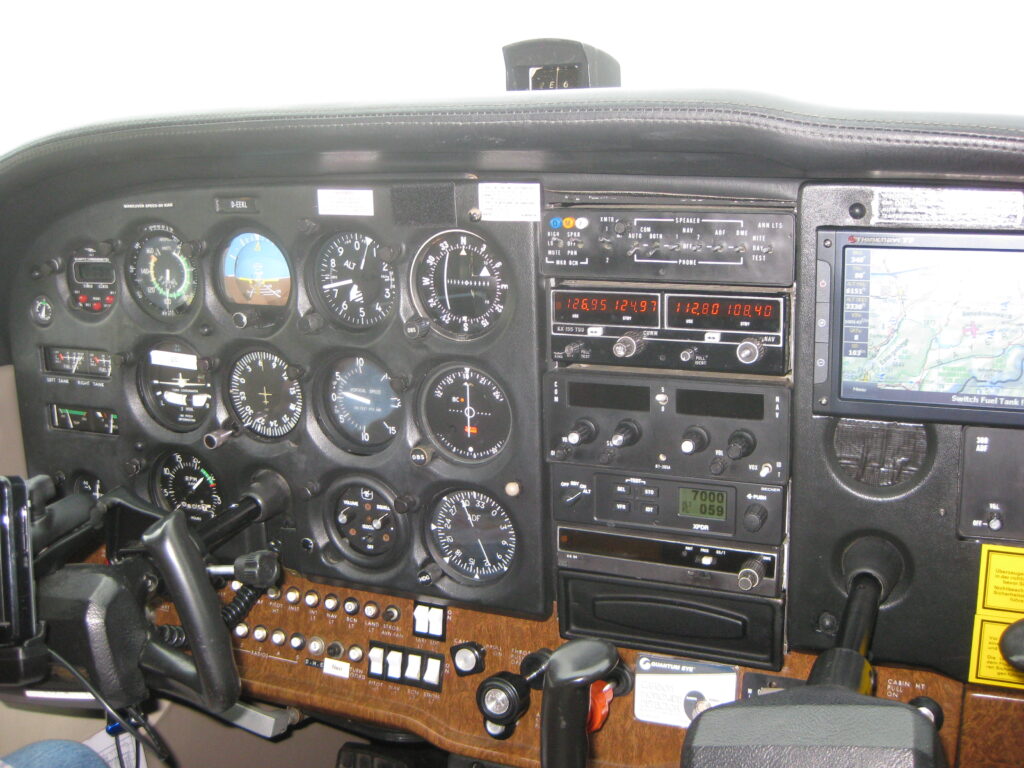

Situational awareness describes how people understand what is happening around them and anticipate what may happen next. In aviation, that understanding can change rapidly.
Information is not understanding
A cockpit display may show position, altitude and traffic information, but interpreting those indications requires context. The crew may be occupied by communication, navigation, equipment configuration or an unexpected change. Information that is present but not noticed cannot contribute to a decision.
Workload and competing attention
Attention is limited. A task that seems straightforward on the ground can compete with other demands in the air. Human-factors education therefore considers workload, interruption and the difference between noticing something and correctly interpreting its importance.
Shared awareness
In a multi-person environment, different individuals can have different mental pictures of the same situation. Communication and training help establish shared expectations. This principle also applies beyond the cockpit, where controllers, maintenance personnel and operational staff may each possess different information.
A learning perspective
The FAA’s aeronautical knowledge handbook provides a starting point for studying decision-making and human factors. A useful discussion of awareness asks what information was available, who could access it and how uncertainty was recognized, rather than assuming an individual always had a complete picture.
For additional context, explore human factors in aviation.
Awareness is more than knowing a position
A person can accurately identify the position of an aircraft on a map and still misunderstand what is happening around it. Situational awareness includes recognizing information, interpreting its meaning and anticipating what might change. These are related but distinct mental tasks. A display can make the first task easier without necessarily solving the other two. A useful teaching example is a classroom map showing two aircraft at a single moment. Adding direction and context changes the interpretation even if their plotted locations stay the same.
Why familiar situations can be deceptive
Familiar routes reduce the effort required to recognize landmarks and interpret routine communications. That familiarity can also make an unexpected change less noticeable. An individual may continue to interpret new information through an outdated expectation. This is not evidence of carelessness; it reflects the limits of human attention. Instructors can discuss this issue by comparing an expected scenario with a slightly different one and asking students what information would cause them to revise their assumptions.
Information design and cognitive workload
A cockpit interface is not successful merely because it displays a large amount of data. Readability, prioritization and the interpretation of alerts are also important. Information presented without context can consume attention without improving understanding. A design that groups related items or makes uncertainty evident may be more useful than a visually impressive screen. These are general human factors questions shared by aviation and other complex interactive environments. Our discussion of simulation as a learning environment considers how controlled exercises can reveal such problems without suggesting that a desktop simulation substitutes for approved instruction.
Further reading
Educational background only; not a source of operational flight instructions. Consult current official publications and qualified instructors.