Understanding Midair Collision Avoidance (MACA)
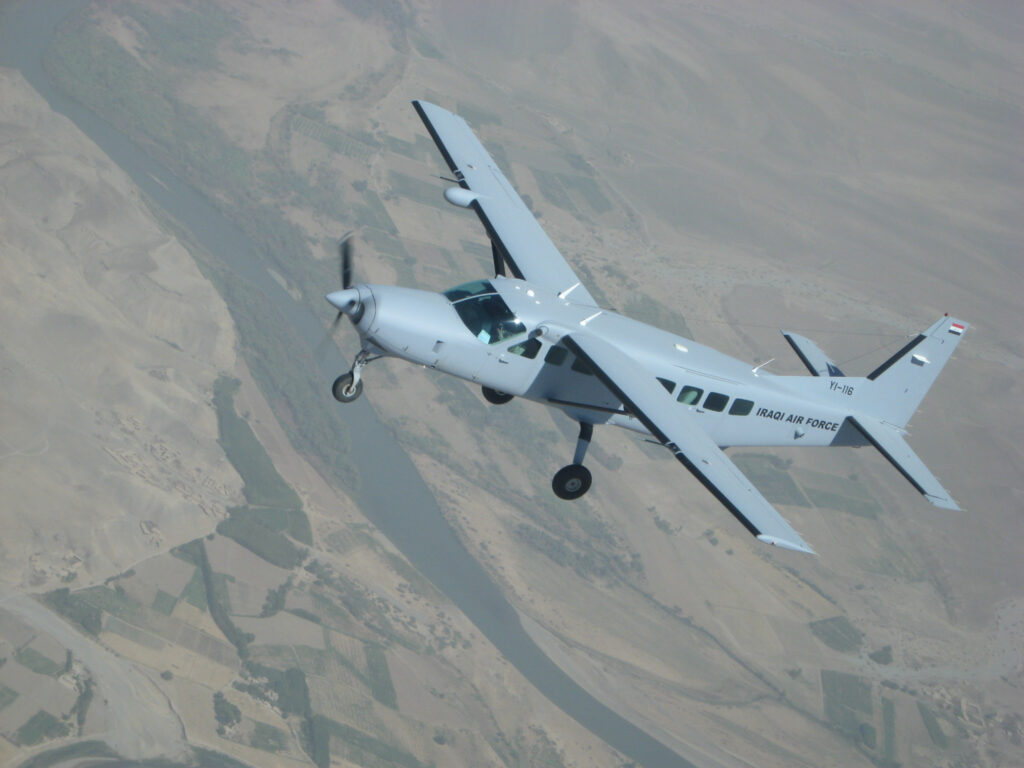

Midair collision avoidance is a layered safety problem, not simply a matter of seeing another aircraft. It involves human perception, airspace design, communication and equipment.
Why shared airspace matters
Aircraft with different performance characteristics may operate within the same geographic area. A small training airplane, a helicopter and a transport aircraft have different visibility characteristics and workloads. Safe coexistence depends on understanding that a clear view from one aircraft does not guarantee a clear view from another.
The role of visual awareness
Human vision is vulnerable to limitations in contrast, attention, viewing angle and cockpit obstruction. The FAA’s collision avoidance advisory circular addresses the continuing role of visual awareness. The NTSB’s safety alerts also make clear that vision alone is not a complete barrier against collision risk.
More than one layer
Air traffic services, aircraft surveillance, published airspace information, training and equipment each address different parts of the problem. None should be treated as an unlimited substitute for the others. The availability and responsibilities associated with these layers vary according to the operation.
Learning the vocabulary
The term MACA appears in military and civilian outreach material. Readers interested in the history of these programs should distinguish educational information from operational instructions, and consult current authorities for any actual flight decision.
For additional context, explore the historical limitations of visual separation.
A conflict is not the same as proximity
Two aircraft can be near each other without being on converging flight paths. Conversely, an aircraft that looks very small in the distance can still be relevant to a developing conflict. The challenge is interpreting relative position and movement, not simply counting aircraft in a window or on a display. This is why collision avoidance is better understood as a system of awareness, communication and separation than a single technique. A classroom exercise might compare two diagrams with identical distances but different flight paths. The diagrams would convey very different implications without requiring students to memorize a simplistic distance threshold.
Multiple defenses have different jobs
A controller, an airborne alerting system and a pilot’s view outside the aircraft each provide a different perspective. None should be represented as an unlimited picture of surrounding traffic. Equipment compatibility, service coverage and the characteristics of a particular operation affect what information is available. An important learning goal is understanding where the picture could be incomplete. The FAA advisory circular linked below discusses collision avoidance in the context of pilot responsibilities; the NTSB safety alert collection offers another perspective on why visual detection alone has limitations.
Learning from ordinary events
A near collision is not the only event that can reveal a weakness in a safety system. An unexpected traffic advisory, a misunderstanding about an aircraft’s location or a distracting cockpit task can prompt a useful discussion even when no accident occurs. Such observations are most useful when the conditions are described accurately and the lesson is not exaggerated. Our overview of situational awareness and interpretation explores the mental work involved in turning several pieces of information into a coherent picture.
Further reading
- FAA AC 90-48E: Pilots’ Role in Collision Avoidance
- NTSB Aviation Safety Alerts
- FAA Safety Team: 2011 portal announcement
Educational background only; not a source of operational flight instructions. Consult current official publications and qualified instructors.